
Mediterranean Interior Design in Southern California: What Makes It Work
October 8, 2026
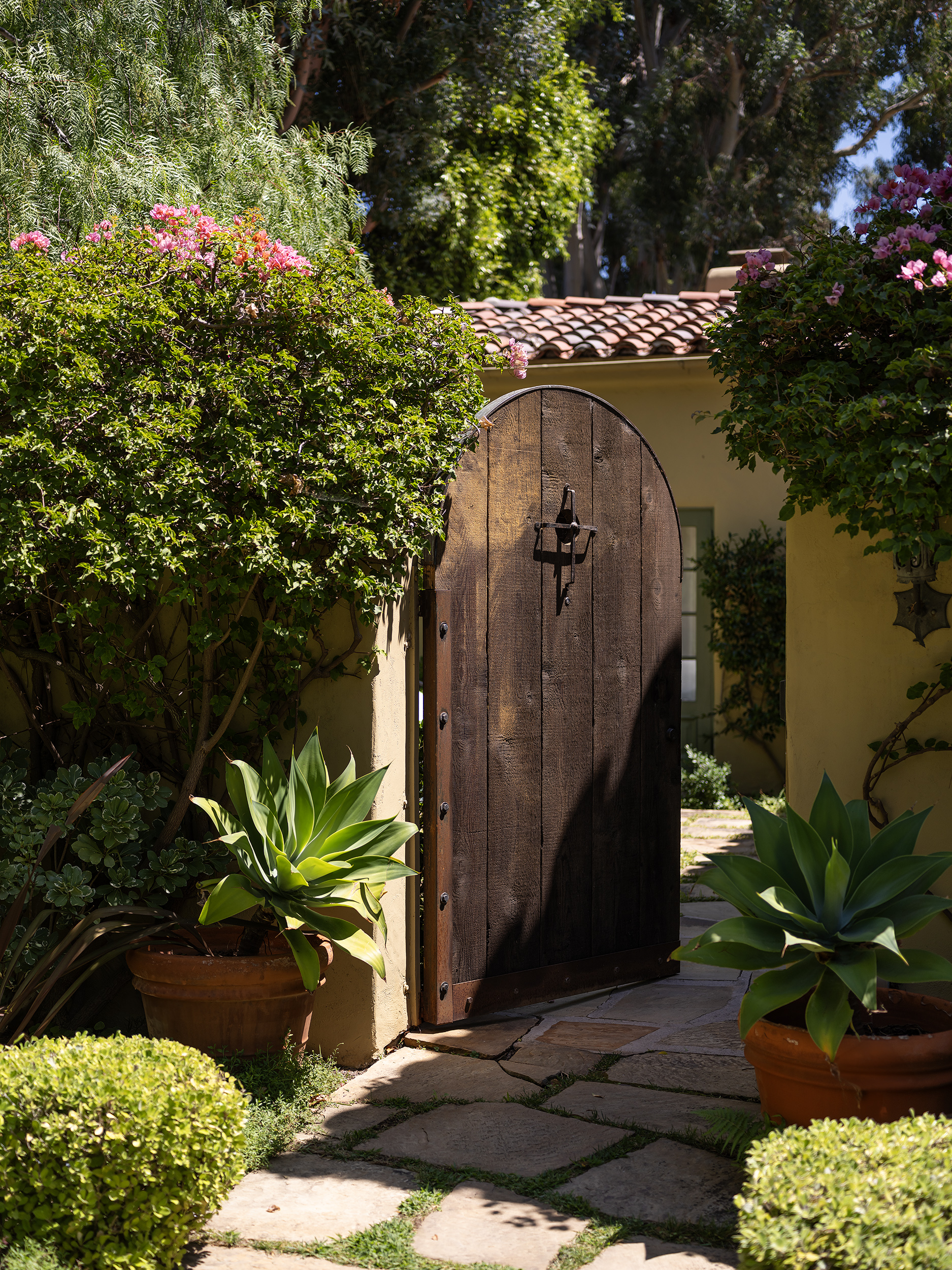
There is a particular romance to Mediterranean architecture in Southern California. Perhaps it is the way afternoon light moves across a plaster wall, the warmth of aged timber, or the quiet drama of an arched passage opening onto a garden. These homes have a natural sense of ease—rooted in history, but perfectly suited to the California way of living.
For us, the appeal of Mediterranean design has never been about recreating a particular European aesthetic. It is about understanding what makes these homes special in the first place: their architecture, their relationship to light and landscape, and the beauty of materials that become more interesting with age.
The most successful Mediterranean interiors are not literal. They are layered, personal, and a little unexpected. An antique might sit alongside a sculptural contemporary piece. A traditional room can come alive with a jewel-toned fabric or boldly patterned textile. Original architectural details provide the foundation, while furnishings, art, and color give the home its personality.
That balance—between old and new, restraint and pattern, elegance and ease—is what allows Mediterranean architecture to feel relevant for contemporary Southern California living.
What Is Mediterranean Interior Design?
Mediterranean design is less a defined aesthetic than a conversation between the many cultures surrounding the Mediterranean Sea. Spanish, Italian, Greek, French, and North African traditions have each contributed to the architectural and decorative language we associate with the style.
Spanish interiors often bring a sense of warmth and architectural drama through plaster, dark timber, handmade tile, iron, and richly aged materials. Italian interiors tend to emphasize proportion, stone, patina, and a more collected European sensibility. Southern France introduces a softer, more relaxed elegance, while Greek interiors are often defined by light, simplicity, and a close connection to the landscape. North African influences can bring pattern, color, texture, and craftsmanship into the mix.
What connects these traditions is not a particular color palette or collection of motifs, but an appreciation for materiality, craftsmanship, natural light, and the passage of time.That is where the style becomes particularly interesting. Rather than asking, How do we make this room look Mediterranean? we prefer to ask, What is already beautiful about this house, and how can we bring that forward?
Why Does Mediterranean Design Suit Southern California So Well?
Mediterranean architecture feels remarkably at home in Southern California because the climate and lifestyle have so much in common with the regions that inspired it.
Plaster walls, stone floors, shaded openings, courtyards, terraces, and deep architectural reveals were all developed in response to warm climates and abundant sunlight. Here, those same elements create interiors that feel naturally connected to the landscape.
There is also a deep architectural history behind the style in California. The 1915 Panama-California Exposition in San Diego helped establish Spanish Colonial architecture as an influential regional language, while the building boom of the 1920s brought Spanish, Mediterranean, Italianate, and related styles to communities throughout Los Angeles, Pasadena, Santa Monica, and Montecito. Santa Barbara’s Spanish architectural identity was further reinforced through rebuilding after the 1925 earthquake. For Southern California homeowners today, that history offers an incredible foundation. The goal is not to make a California home feel European. It is to recognize that California already has its own relationship with European architecture, and to reinterpret that history for the way we live now.
Spanish, Italian, or Monterey: Which Mediterranean Is Your House?
Before selecting furniture or finishes, look closely at the architecture. A Spanish Colonial home calls for a different conversation than an Italianate estate or Monterey Colonial. Each has its own proportions, details, and history, and the interiors become most compelling when those qualities are respected rather than disguised.
Spanish Colonial Revival
Think plaster walls, dark timber, arched openings, terracotta, handmade tile, courtyards, and wrought iron. The architecture tends to have a strong sense of texture and shadow.
Our approach: Keep the architectural soul, then introduce unexpected pattern, softer upholstery, collected antiques, and contemporary art to keep the home from feeling overly rustic or period-specific.
Italianate and Tuscan
Italianate homes often lend themselves to a slightly more formal and layered interpretation, with stone, plaster, classical proportions, antique furnishings, and a beautiful sense of patina.
Our approach: Rather than leaning too heavily into traditional Tuscan decoration, we create tension through a mix of refined antiques, contemporary silhouettes, art, and unexpected color.
Monterey Colonial
Monterey Colonial architecture has a distinctly California sensibility, often combining traditional details with a more relaxed relationship to the landscape.
Our approach: Vintage furnishings, country antiques, handwoven rugs, printed linens, and collected objects can bring warmth and individuality while preserving the architecture. This is a philosophy reflected in the studio’s own Landmarked Santa Monica Monterey Colonial project.
Modern Mediterranean
Modern Mediterranean homes simplify the vocabulary—cleaner arches, restrained plaster, natural stone, warm wood, and sculptural furnishings.
Our approach: Maintain warmth and character through texture, craftsmanship, art, and pattern rather than relying on ornament.
Ultimately, the architecture should establish the conversation. As the studio has noted, its approach begins by considering the existing architecture when establishing the design intent.
What Are the Key Elements of a Mediterranean Interior?
Plaster That Lets the Light In
Mediterranean interiors are wonderfully tactile. Lime plaster, Venetian plaster, limewash, and traditional stucco create subtle variation across a wall, allowing natural light to become part of the architecture.
We gravitate toward plaster tones that feel warm and nuanced rather than overly yellow—soft ivory, chalky white, warm taupe, pale stone, and muted mineral tones.
The imperfections are part of the beauty.
Natural Stone and Pattern Underfoot
Terracotta, limestone, travertine, and handmade tile bring an immediate sense of permanence to a Mediterranean interior.
But flooring does not need to announce itself.
A beautifully worn limestone floor can provide a quiet foundation for an expressive room, while patterned tile can become a more deliberate moment in a kitchen, entry, or bath.
Pattern is particularly important when the rest of the architecture is restrained. It introduces personality without compromising the sense of history.
Wood, Iron, and Architectural Detail
Few combinations are more beautiful than warm timber against pale plaster.
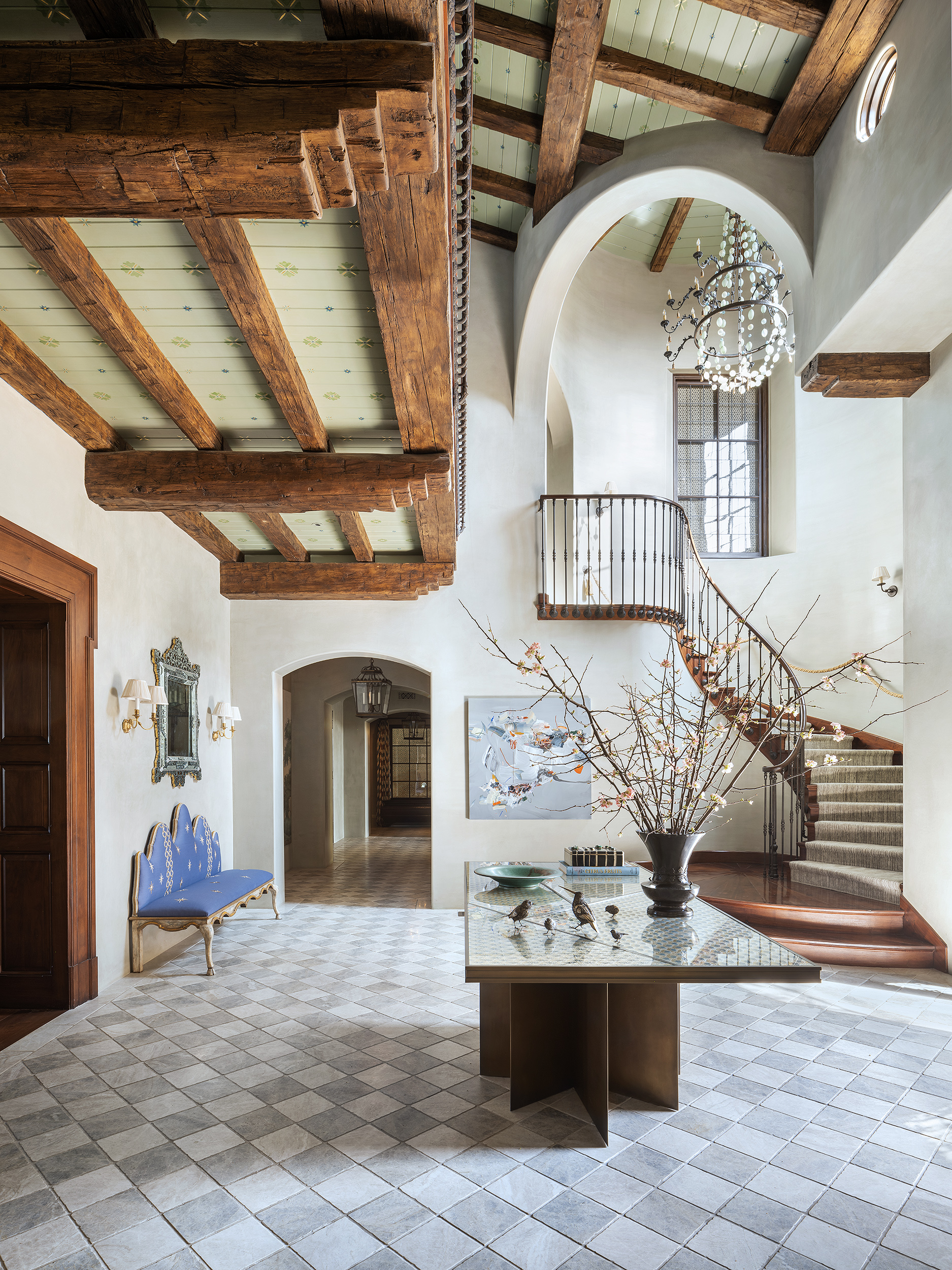
The entry pictured here captures that relationship beautifully. Massive reclaimed-looking beams draw the eye upward, while the curved staircase introduces an almost sculptural quality. The delicate iron railing provides contrast to the weight of the timber, and the pale floor keeps the room feeling open and luminous.
These architectural elements do not need to be decorated around. They are the decoration.
Furniture, Textiles, and the Art of the Unexpected
This is where a Mediterranean interior can become distinctly personal.
Rather than furnishing a historic home exclusively with pieces that look historic, mix periods and sensibilities. A traditional console might be paired with contemporary artwork. An antique chair can be upholstered in an unexpected fabric. A simple modern sofa can sit comfortably beneath an elaborate architectural ceiling.
Linen, wool, woven materials, embroidered textiles, and printed fabrics add softness and dimension.
And color matters.
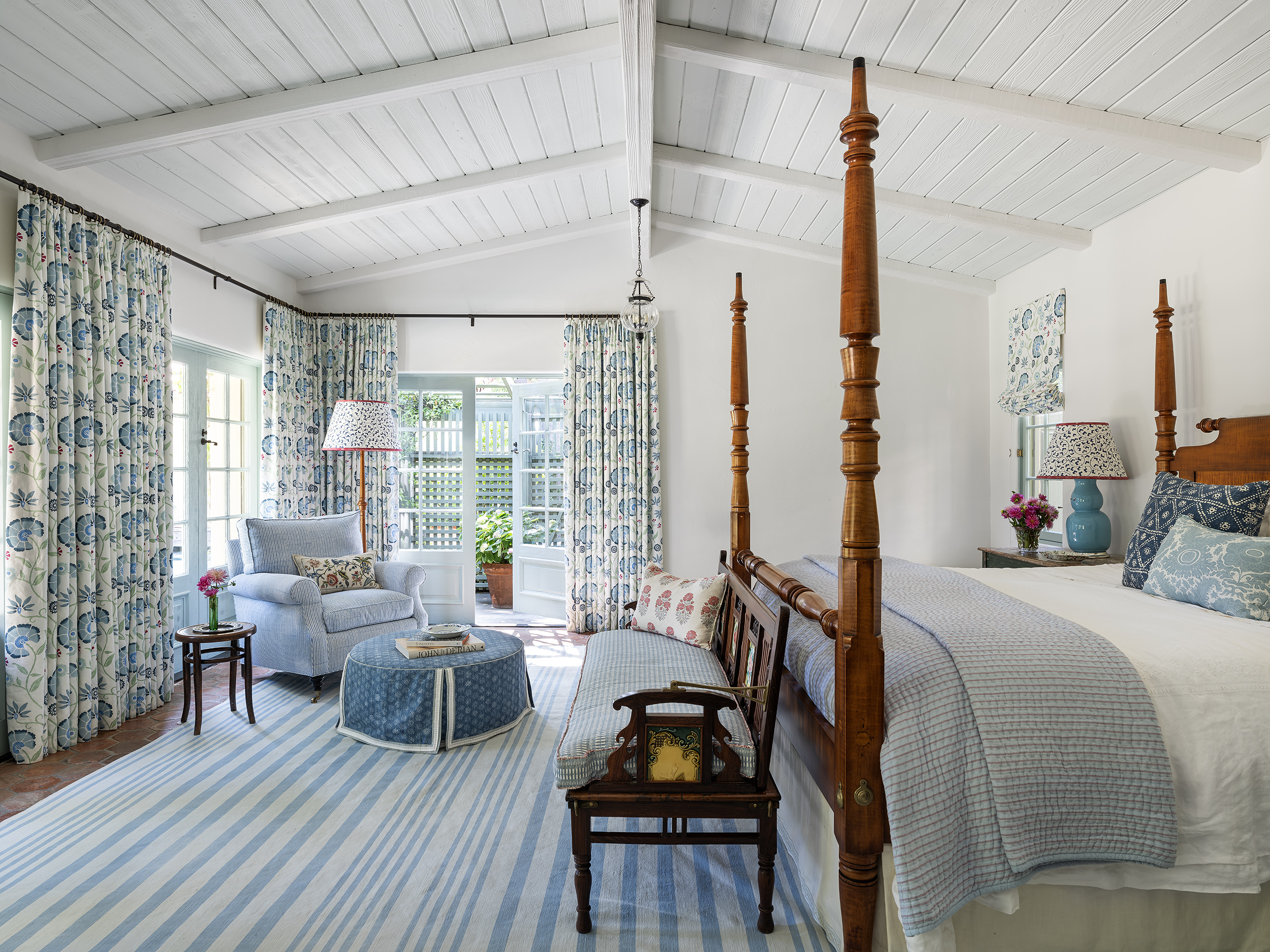
Although Mediterranean interiors are often associated with earth tones and neutrals, a more personal interpretation might introduce deep blue, sage, ochre, coral, or jewel tones. Our work frequently uses unexpected combinations of pattern, texture, and color to give traditional architecture a fresh perspective.
How Do You Update a Dated Mediterranean Home Without Losing Its Character?
The answer is rarely to erase what came before.
Some of the most beautiful elements in an older Mediterranean home are precisely the things that cannot be manufactured today: hand-applied plaster, aged timber, original ironwork, handmade tile, irregular stone, and architectural details shaped by generations of craftsmanship. Keep the bones. Edit the excess. Reimagine the rooms around them.
Heavy draperies, faux finishes, overly dark decorative treatments, and furniture that overwhelms the architecture can often be reconsidered. But rather than stripping the house of its character, the goal is to create breathing room around the details that matter.
Lighter plaster tones can make historic architecture feel fresh. Custom cabinetry can combine traditional craftsmanship with cleaner lines. Contemporary lighting can provide a sculptural counterpoint to original beams. A richly colored fabric can bring new life to a vintage chair.
And art can change everything.
The entry in this image is a perfect example of that tension. The architecture is deeply traditional, but the furnishings do not attempt to imitate it. The blue upholstered bench brings a fresh, feminine note to the room. The artwork feels contemporary. The arrangement on the console is organic and almost whimsical. Even the chandelier, while decorative, feels more collected than expected.
The effect is not “Mediterranean decor.” It is simply a beautiful, layered home with Mediterranean architecture. That distinction is important.
Our Santa Monica Spanish Colonial project similarly approached a classic 1920s home by preserving original architectural details while introducing contemporary textures and patterns for 21st-century living. The Santa Monica Italianate Estate paired transitional furnishings, antiques, and contemporary art within a European-inspired villa.
Bringing the Outdoors In
Perhaps the defining quality of Mediterranean architecture is its relationship with the outdoors.
A courtyard should feel like an extension of the house. A loggia should invite lingering. A terrace should feel connected to the rooms beyond it.
Whenever possible, we love to repeat materials across that threshold. Stone flooring can move from interior to exterior. A plaster finish can continue onto an outdoor wall. The same palette of textiles and furnishings can create a visual connection between an interior sitting room and the garden beyond.
The landscape becomes another layer of the interior. Olive trees, citrus, lavender, rosemary, and bougainvillea are natural choices for Southern California, bringing fragrance, color, and softness into the architecture.
And sometimes the simplest gestures are the most effective—a branch-filled vessel on a console, a view framed through an arch, or a window positioned to capture a garden.
Mediterranean design is ultimately about this sense of connection.
Frequently Asked Questions
What colors are typical of Mediterranean interior design?
Warm whites, ivory, limestone, sand, terracotta, and muted earth tones provide a natural foundation. But Mediterranean interiors do not need to be neutral. Deep blues, greens, ochres, dusty rose, and jewel tones can add personality, particularly through upholstery, textiles, art, and accessories.
What are the key features of a Mediterranean-style house?
Plaster or stucco walls, natural stone or terracotta floors, exposed timber beams, arches, courtyards, ironwork, handmade tile, and a strong connection between interior and exterior spaces are common characteristics.
What does a Mediterranean living room look like?
Rather than following a strict formula, think of a Mediterranean living room as layered and collected. Natural materials form the foundation, while upholstered furniture, antiques, textiles, artwork, and contemporary pieces give the room personality.
How do you decorate a Mediterranean-style home?
Begin with the architecture. Preserve the original details that give the house character, then introduce furniture, textiles, art, and lighting that reflect the people who live there. Mix periods and materials rather than trying to match everything.
What is modern Mediterranean interior design?
Modern Mediterranean design simplifies traditional architectural elements while retaining their warmth. Plaster, natural stone, wood, linen, and aged metals are combined with cleaner silhouettes, contemporary art, and more edited furnishings.
What are some examples of Mediterranean-style home designs?
Southern California is filled with beautiful examples, from Spanish Colonial Revival and Monterey Colonial homes to Italianate estates and contemporary Mediterranean residences. At Christine Markatos Design, projects including the Santa Monica Spanish Colonial, Santa Monica Italianate Estate, Santa Monica Mediterranean, and Landmarked Santa Monica Monterey Colonial demonstrate different ways of working with historic architecture while creating interiors that feel current and personal.
Mediterranean, Through a California Lens
The beauty of Mediterranean design is that it does not need to be literal.
It can be a centuries-old timber beam paired with a contemporary painting. A traditional iron railing against a softly colored plaster wall. An antique console beneath a modern chandelier. A handwoven rug layered over stone. A jewel-toned fabric bringing a little exuberance into an otherwise quiet room.
For us, the most successful interiors exist somewhere between classical and contemporary, refined and relaxed, collected and unexpected.
That is what makes Mediterranean architecture such a natural fit for Southern California. Its warmth and history provide the foundation, while the California landscape, light, and way of life allow the interiors to evolve.
The result is not a reproduction of the Mediterranean.
It is something more personal: a home with a sense of history, a sense of place, and a distinctly modern point of view.